

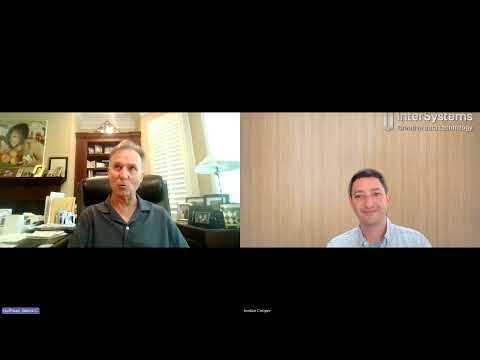
Healthy Data Podcast Jay Hoffman (Henry Ford Health System) & Jordan Cooper (InterSystems)
July 14, 2026, 6:01PM
21m 24s
Jordan Cooper 0:03
Jay Hoffman, the former Vice President of Business Development at Henry Ford Health System. Jay, thank you so much for joining us today.
Jay Hoffman 0:10
Thanks for having me.
Jordan Cooper 0:11
So for those who don't know, Henry Ford Health System is a 4,600 bed health system headquartered in Detroit, Michigan, with 10,000 providers supporting 20 hospitals. Today, we're going to be discussing mostly the Ascension joint venture that Jay sourced and ran with at Henry Ford Health System. And in discussing that joint venture, hopefully Jay will be able to provide the business development perspective to our more technically inclined audience. So Jay, the floor is yours. Tell me about sourcing the Ascension JV and all the different elements of that deal.
Click to read the full transcript
Jay Hoffman 0:49
So I think the evolution of that deal really came about from a variety of discussions we had been having in the market with other health systems and looking at opportunity to partner and to get scale. Ascension had embarked
Jordan Cooper 1:03
Mhm. Mhm.
Jay Hoffman 1:09
on looking at their portfolio of markets, I'll say hospital markets across the country and was electing to get out of some markets like Illinois, double down in other markets like Austin and Nashville. And in Michigan, they had a long history and they weren't so much looking at exiting as finding a relationship with an organization that could support the mission of their facilities, some of which had been in the Ascension system since the inception of Ascension from a variety of things. So it was really a, I will say, less a sourcing effort than an ongoing conversations
Jordan Cooper 1:52
Mhm.
Jay Hoffman 1:53
with their leadership, particularly at the CEO level, Joe Impicciche and Bob Riney, our CEOs, having conversations at a very high level to start the process of putting together a partnership that is very unique in the industry.
Jordan Cooper 2:11
So I'd like to consider this deal. It's now, there are conversations going on between the Ascension and Henry Ford Health System CEOs, and they're looking to potentially create a partnership. And of course, there's going to be a lot of impact of that partnership on IT systems. At what point do you bring in IT leadership into the conversation, and how can they make themselves Useful, more valuable to facilitate this transaction.
Jay Hoffman 2:41
You have to be very careful in terms of the timing of those discussions, because in a very complex transaction that impacts the lives of a lot of team members on both sides of the partnership, you know, I think at the time,
Jordan Cooper 2:55
Mhm.
Jay Hoffman 3:00
We had roughly 20, call it 25 to 30,000 employees, Ascension had somewhere around 20,000 employees, 18 to 20,000, you know, so there was a lot of people to be impacted. What you don't want in a transaction like this is it's always a fine line between the number of people that are, quote, under the tent at any particular time and have knowledge of the deal, very confidential discussions, versus the people that you need to be under the tent to actually execute on things and provide you. So there's never a right answer in terms of the timing of that.
Jordan Cooper 3:26
Mm-hmm.
Jay Hoffman 3:42
But, you know, we got fairly long, far long in the process until such time as we widened that scope. Not by much. I mean, on both sides of the equation, this was a very small group of people because of the, again, the nature of the transaction. But probably, I'm trying to think when we did this, probably a
Jordan Cooper 3:48
Mm-hmm.
Jay Hoffman 4:04
about, I'm going to say four months prior to the actual execution of a definitive agreement, and it could have been five, you know, somewhere in there, is when we brought in our CIO to start looking.
Jordan Cooper 4:18
Mhm.
Jay Hoffman 4:25
at the impacts and the potential transition of IT services and what that would take. We didn't allow him to bring in team members at that time. Basically, we just needed a high level view until we could move forward so that we could move forward and verify some of the assumptions about the cost to implement a effectively a conversion of IT platforms from what Ascension had, which was across the hospitals we got, which was a mixed bag of systems from Cerner to Athena to even all scripts. You know, so you had a mixed bag of systems across those hospitals that were going to be part of the partnership versus us operating kind of on one instance of Epic across our entire platform. And the idea, go ahead.
Jordan Cooper 5:19
French. Yeah, so Jay, I just think that our listeners may be wondering a few things. Number one, you know, if I'm thinking, I'm a CIO, I'd like to get involved more quickly. Some things to consider are, how long would you say the Henry Ford Health System and Ascension CIOs How long did they have to begin to complete implementing this deal, right? Because the problem is saying, hey, we're going to execute this deal in four months, but 60 days after that point, we need all the systems go live, everything migrated and converted. But if you say, you know, you have two years, that's a different story.
Jay Hoffman 5:47
Just. So. So yes, so very good point. So a transaction works very different, right? So we knew that four month deadline or five months that we gave time was really around kind of
Jordan Cooper 6:10
Yeah. Hmm.
Jay Hoffman 6:15
looking at a high level, what the potential cost of implementation would be and what the potential synergies from implementation would be. What we actually did is we signed a definitive agreement in October, I think October of 2020.
Jordan Cooper 6:17
Mhm. Mhm.
Jay Hoffman 6:35
for, get my dates right. However, we did not close on the transaction because of regulatory approvals that were needed and other things that were needed until September of
Jordan Cooper 6:36
Mhm. Mm. Twenty-five.
Jay Hoffman 6:53
25, right. So I might, yeah, I think that's the right timeline. I have to go back and check my facts. But it's basically, it took us a year to get to closing. We used that year. That is when everybody was under the tent, right? Because we actually announced the defendant agreement. Now we could bring everybody in. And so the CIO and his team and the Ascension team worked out, you know, here's the plan. Two big pieces of that. What is the transition services agreement from Ascension Technologies for supporting those hospitals before those implementations could take place?
Jordan Cooper 7:20
Mm-hmm.
Jay Hoffman 7:32
So basically continue to support those hospitals for a fee for a period of time. And what would the implementation look like once the deal closed? So there was a...
Jordan Cooper 7:32
Mhm. Mhm.
Jay Hoffman 7:46
full year of planning between the teams that went into process before the deal actually closed. And so, Steve, go ahead.
Jordan Cooper 7:47
Mhm. And Jay, just on that part, we're a little bit less than a year out from the deal closing last fall. Now we're in July 2026. How long was the implementation projected to take?
Jay Hoffman 8:06
The. So we got the, we've got the years wrong and I apologize for that. So we must have signed in 23. We closed in 24. So now we're a year, we're a year and a half in, right? We're a year and a half. And so we started implementing this year with
Jordan Cooper 8:18
Uh-huh. The.
Jay Hoffman 8:27
put installing Epic into all of those sites. And this is a massive number of sites. So they, there was the plan was laid out and you would have to talk to my CEO about this, but the first we call it, we call the project Luminate, right. And essentially,
Jordan Cooper 8:41
About 2 years, basically. Yeah.
Jay Hoffman 8:46
We implemented the first phase, all the ambulatory sites of the Ascension facilities early this year in 2026. We just did in June of this year, we did the second big wave, which was
Jordan Cooper 9:03
Mm-hmm.
Jay Hoffman 9:06
all of the hospitals, right? So now all of the ambulatory sites and all of the hospitals except one are in our instance of Epic. There are some other things that we're doing in what we're calling a wave three that will take place in November, early November of this year.
Jordan Cooper 9:08
Right. Yeah. Mm-hmm.
Jay Hoffman 9:26
which will pick up the last hospital, which was on a different platform from everybody else, and some ambulatory sites related to that facility and some other physicians. We are also throwing in some non-Ascension facilities that have joined us that they all put in, you know, get the benefits of doing that all in one way. So by November of this year, slightly over two years from the actual closing date, we will have everybody on our instance of Epic as I understand it.
Jordan Cooper 9:52
Mhm.
Jay Hoffman 10:05
The.
Jordan Cooper 10:05
before the deal closes prior to the year of regulatory approval, you're going to reach out to me to ask to evaluate the deal. I'm going to spend time on this. And then that following year, I'm going to spend a lot of time and resources, because again, everyone's under the tent. How frequently do deals fall apart prior to that initial close five months in? and how frequent do they fall apart in the ensuing year of regulatory approval, because that represents, to me, wasted resources.
Jay Hoffman 10:30
Yeah. So when you say that that first close is actually a signing of the definitive agreement, right? So really the only conditions in a definitive agreement like that are really around regulatory approvals, right? So why does a deal fall apart?
Jordan Cooper 10:38
Right. Okay.
Jay Hoffman 10:52
And there's histories of this around, right? Regulatory approvals sometimes don't happen, right? In particular, the Federal Trade Commission has blocked a number of transactions over the past few years related to combinations. So you'll see deals fall apart because of regulatory approvals. Sometimes, not often, because there might be a disagreement or
Jordan Cooper 11:01
Mhm. Mhm. Got it.
Jay Hoffman 11:18
failure of a party to, you know, deliver, be able to deliver what they said they were going to deliver in the definitive grant. So for instance, one thing we struggled with and we all struggled with as IT people is you had in the middle of all these conversations, you had to change healthcare.
Jordan Cooper 11:41
Mhm.
Jay Hoffman 11:42
situation, right, which impacted all of us. Ascension also had their own cyber attack, which impacted the whole process as well. So we had a period of time where, you know, we had to work around Ascension cyber attack. Fortunately, we were able to recover. We were able to have a workout plan, but it did impact several things within the deal. And I'm sure from it certainly distracted Ascension's ability to focus on some of the things we were doing around IT, because clearly, you know, they were, they and the hospitals were overwhelmed.
Jordan Cooper 12:05
Ohh.
Jay Hoffman 12:20
By that situation, which was horrific, right?
Jordan Cooper 12:22
And just... As background, Jay, quickly, prior to the signing of the definitive agreement, how frequently would that sort of scenario fall through? Infrequently?
Jay Hoffman 12:35
I mean, you know, it's a strange world right now. So yeah, look, you could, yes, there could have been things in the control of both parties that would have led to the deal that in the run up to signing a definitive agreement, that's a very touchy time, right? People can agree to disagree.
Jordan Cooper 12:38
Yeah. Mm.
Jay Hoffman 12:55
things fall apart and people walk away from deals. So yes, and that is the reason why we only involve a very limited number of people in that particular time frame, because you don't want to absorb a lot of resources. We wouldn't want to have our entire IT team
Jordan Cooper 13:05
Mhm.
Jay Hoffman 13:15
focused on a transition of services for that four month period, knowing that you don't have a signed definitive agreement. So until you have that signed definitive agreement, that's when you really are going to start absorbing resources because you have a deal that few people are going to be able, want to walk away from or can walk away from.
Jordan Cooper 13:23
That's it.
Jay Hoffman 13:36
except for exceptional third-party approvals and things like that.
Jordan Cooper 13:39
Shay, that's a really interesting perspective for the listening audience of Healthy Data Podcast, because you have some VPs and directors in here who say, you know, we need to be looped in a little bit earlier in the process here. And the idea is, but looped in means allocating your time and attention, which is already stretched thin for a project that may never ultimately go through. So I'd like to pivot there and ask you, what factors do deal guys like you need to hear about from the lead IT people about processes that would be required to be completed in order to ensure the smooth flow of this joint venture?
Jay Hoffman 14:00
Yeah. Yes. So I would answer that in one way. It really, and I'll broaden it out beyond the joint venture and say, it really depends on the size of the transaction, right? Interestingly, the smaller the transaction, the more information I need up front, because, you know, the variable, the
Jordan Cooper 14:27
Mhm.
Jay Hoffman 14:38
ability to impact the future financial performance and capital required to operate are really, you know, sensitive to change, right? In a large transaction, you know, the margin for error is a lot wider. So, you know,
Jordan Cooper 14:56
Mhm.
Jay Hoffman 14:58
I can say, give me an estimate on transition costs. And it can be, you know, $100 million plus or minus 10 million, right? Or plus or minus 10%. And I might be fine with that as an initial forecast that we're going to fine tune later. That probably gives me
Jordan Cooper 15:08
Mhm.
Jay Hoffman 15:17
efficient, you know, amount to say, okay, here's that, here's the synergies coming from that. Does that on a relative basis make sense, even if we're off a little? On a smaller deal, that margin of error becomes magnified, right? If it's a 5 million IT conversion and you're plus or minus 10%, that might throw my whole entire transaction.
Jordan Cooper 15:27
Mhm. Correct.
Jay Hoffman 15:40
off. So I may want more of your people's time and attention on a smaller transaction earlier on than I would in a large transaction that has, you know, where I've got cushion.
Jordan Cooper 15:52
So, as we kind of edge towards the end of this particular podcast episode, I'd like to give you an opportunity to... kind of explain your perspective about the business rationale for these sorts of large transactions. As you know, many health systems across the country are undergoing a great amount of M&A activity. I guess, like
Jay Hoffman 16:20
****.
Jordan Cooper 16:22
Like, where are you seeing healthcare in America go? What kind of, what would you, yeah, what message do you have for people who are working in the IT vertical, the provider space?
Jay Hoffman 16:36
I think what is really driving a lot of this is, you know, we all have a high fixed cost structure, right? And reimbursement for healthcare services is not getting any better. In fact, you know, the margins are razor thin. You know, and I think it's the effort
Jordan Cooper 16:44
Mhm. Mhm.
Jay Hoffman 16:55
in the back office infrastructure to get scale, right, to lower the unit cost of delivery. So obviously, you know, IT convergence, IT platforms, ERPs, very expensive, EMRs, everything is very expensive from an IT standpoint. But if you're spreading that over a much larger
Jordan Cooper 16:58
Mhm. Yeah.
Jay Hoffman 17:15
base of patients or employees, right, you're lowering the per unit cost. And that's really part of the driver, right? And it applies across the board, not just IT, but it's, you know, supplies and purchasing power. It's capital power. It's the ability to negotiate better with equipment suppliers and others because you are bigger, right? You have scale and it drives more efficiency.
Jordan Cooper 17:42
Now. So sometimes when people are listening to episodes like this and you hear, well, I know that acquisitions definitely drive more scale and reduce the unit costs and the way they get more efficient is by eliminating redundancies like firing me and taking my salary. And that's an efficiency that's gained. So that's obviously a concern that some people may have. What should listeners be excited about? What are the new opportunities for employees of these health systems and for IT leaders in these health systems? What are the opportunities when you see this kind of joint partnership or acquisition activity?
Jay Hoffman 18:24
Well... I think the employee question is overblown. We typically, and we did this with Ascension, we took on all of their associates who wanted to join us for a, you know, guaranteed period of time, right? I think there are, you know, IT is tricky. I'd be more worried about AI than I would about hospital mergers and acquisitions if I, quite frankly, was in that space.
Jordan Cooper 18:37
Mhm. No.
Jay Hoffman 18:48
But I think what's exciting about it is, look, we are spending a significant amount of money, time and effort to do this implementation. And I think, you know, as long as I've been in this business and, you know, it's over 40 some years, you know, the one thing that I will say and make your IT guys feel good is that IT has only become more, you know, important and more impactful on the delivery of care than ever before. So it's not going away. It's only going to become a bigger and bigger piece of this. You know, technology is driving everything. I think that it will, you know, it continues. I can tell you when I was first buying hospitals back in the 80s and early 90s, we hardly ever talked to the IT guys about a deal. You know, they were the afterthought because it was, you know, the EMRs were, hell, we were doing this stuff on paper. It was
Jordan Cooper 19:42
Mm-hmm.
Jay Hoffman 19:50
You talk to the IT guys, it was about financial reporting. It wasn't about clinical reporting. Now look where we are. Look how important IT has become, both on the clinical side and on all the other aspects of our business. We can't manage without it, right? And so all I can see is it's becoming more and more essential. to drive value in healthcare. So you remain being the most significant part. Doctors first, now IT guys.
Jordan Cooper 20:12
No. Uh-huh. Jay, I appreciate your time. Thank you so much for joining us today.
Jay Hoffman 20:23
Sure.
Jordan Cooper 20:23
And for our listeners, again, this has been Jay Hoffman, the former Vice President of Business Development at Henry Ford Health System, discussing essentially the take away is IT is becoming ever more important and essential to every transaction in the provider space in health care in the United States. And They have a seat at the table and increasingly they're becoming more frequently and more quickly brought into the tent. So Jay, thanks again for joining us today.
Jay Hoffman 20:54
Great. Thank you for having me.