

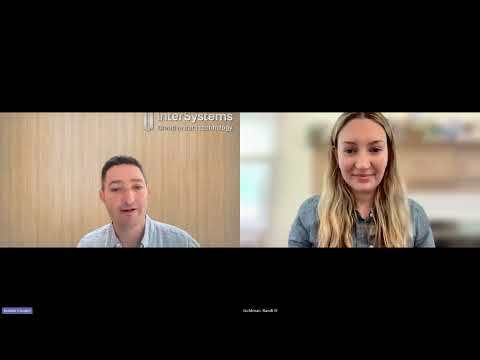
Healthy Data Podcast Randi Goldman (Northwell Health) & Jordan Cooper (InterSystems)
July 14, 2026, 1:34PM
17m 39s
Jordan Cooper 0:03
Goldman, an associate professor at Northwell Health at the Donald and Barbara Zucker School of Medicine at Hofstra Northwell, and the Program Director of Reproductive Endocrinology and Infertility Fellowship again at Northwell. Randy, thank you so much for joining us today.
Randi Goldman 0:18
Thank you so much, Jordan. It's great to be here.
Jordan Cooper 0:20
So for our listeners, Northwall Health is a health system headquartered in New Hyde Park, New York, with 8,000 beds in 29 hospitals serviced by 16,000 providers. So, Randy, today we're going to be speaking about the role that data plays in enabling or inhibiting the proper balance of quality of care with patient access and a variety of other topics. But let's start there. What's the role of data in your daily job and what are some projects you're working on?
Click to read the full transcript
Randi Goldman 0:48
I am a huge proponent of data-driven care. And as the program director for our fellowship, I speak about evidence-based medicine and using data in every decision that we make, right? If it's not grounded in evidence, then it probably doesn't deserve to be prime time. So a couple of things that I'm working on.
Jordan Cooper 0:52
Mhm. Yeah. Mm-hmm.
Randi Goldman 1:09
are helping cancer patients to sort of get through the door and identifying the need for cancer patients who should or might want to undergo fertility treatment. And then on a similar vein, identifying patients who are at risk for fertility issues in other ways, for example, endometriosis.
Jordan Cooper 1:20
Mm-hmm.
Randi Goldman 1:30
where we use the data to identify a clear gap and need and use that data to design systems to get patients through the door efficiently and to get them the care that they need.
Jordan Cooper 1:44
So let's tackle those one by one. So clinical work, accessing fertility care among patients with cancer, what are some of the problems these patients are facing and how to use data to improve access for these patients?
Randi Goldman 1:58
So Northwell is, as you know, a very, very large health system. And in the last year alone, I think there have been somewhere around 19,000 cancer patients that Northwell has treated. And, you know, a lot of people don't know this, but cancer treatment has
Jordan Cooper 2:03
Mmh.
Randi Goldman 2:17
an enormous potential to threaten fertility. So in other words, the very same chemotherapy treatment that can save your life can potentially cause permanent infertility, right? So there is.
Jordan Cooper 2:26
Right. So for our listeners, basically any kind of chemotherapy that kills rapidly growing cells like hair also kills rapidly growing cells like embryos.
Randi Goldman 2:36
Exactly, like eggs and sperm. That's exactly right. And, you know, thankfully, our cancer treatments are getting better. So, you know, the data says that the five-year survival rate for women of reproductive age is upwards of about 85 or 90%. That is incredible.
Jordan Cooper 2:38
Mhm. Sam.
Randi Goldman 2:56
right? That means that the vast majority of young people with cancer are going to survive. And that's an incredible thing. Survivorship is increasing because our...
Jordan Cooper 3:05
And that's across all types of cancer.
Randi Goldman 3:08
Yeah, you know, of course, some, you know, cancers have more effective treatments than others. And that's, you know, a whole other, you know, a whole other topic. And I think we need to, of course, our cancer treatments do need to continue to improve as I'm sure that they will as our technology advances. But where that leaves you is
Jordan Cooper 3:19
Mm.
Randi Goldman 3:27
you know, this gap. Whereas people are now thinking beyond the immediate sort of survivorship phase to down the road, where they might decide that a new priority is potentially having a biological child or a biological family. And of course, there's many, many ways to build a family. But there is
Jordan Cooper 3:45
Mm-hmm.
Randi Goldman 3:47
you know, there is a gap there. And for several reasons, one of the things that we noted as a large gap is that in order to, in order to do what's called egg freezing, which you might have heard about in the social media, you know, people do elective egg freezing, very similar process for medical indications like
Jordan Cooper 3:49
Mhm. Mum.
Randi Goldman 4:07
like cancer treatment. In order to effectively have an egg freezing cycle, a person has to be entered puberty already. You know, their whole brain, ovarian axis has to be active. And for young girls with cancer, their axis is not active.
Jordan Cooper 4:13
Mm. Mhm.
Randi Goldman 4:27
So there was an enormous gap that we noted when looking at the data in people who were not able to get fertility preservation care. There is no other program on Long Island that offers something called ovarian tissue freezing, where you can take an ovary,
Jordan Cooper 4:27
Mhm. Mm-hmm.
Randi Goldman 4:44
remove it from the body, cut it into strips, and then freeze it. So that in the future, if that person has infertility and wants to have a biological child, you can actually put the ovarian tissue strips back into the body. And that person can then try to have a biological child. It's really an incredible technology.
Jordan Cooper 4:46
Mmh. Mhm.
Randi Goldman 5:05
and filled a major gap in oncofertility care. And I'm very, very happy to report that the program opened last October, and we have now had seven patients come through who have had successful ovarian tissue preservation procedures.
Jordan Cooper 5:05
Huh.
Randi Goldman 5:24
And, you know, something that we're quite proud of and really filled a major gap in fertility care.
Jordan Cooper 5:30
Got it. And so I know that one of the topics we're covering today is balancing quality of care with patient access and how data is helping drive this care. So it seems like a really innovative procedure. You're having parents give consent for six-year-old girls who may want to have a kid in 20 years to undergo a procedure.
Randi Goldman 5:45
Mhm. Yep.
Jordan Cooper 5:51
Lots of interesting hypotheticals, but how is what's the role that data is playing in this whole process?
Randi Goldman 5:59
Well, I think it's important not to over-promise, right? So what do we know with the data? We know that there have been about 300 live births worldwide from this technology. What we don't know is really what the denominator is. In other words, how many people
Jordan Cooper 6:02
Yeah. Huh.
Randi Goldman 6:18
have come through in when they are older and want to have that ovarian tissue go back and have been successful with it. And I think when you look at the data, it's really important to critically think about it, right? A lot of people are not publishing their negative outcomes. More people are publishing their positive outcomes.
Jordan Cooper 6:35
Mhm. Mm-hmm.
Randi Goldman 6:38
So it can in some ways overestimate the likelihood of success when you put that back in the future. So that, I think, comes to the quality, right? You need to be really honest with people who are making a major decision about their child.
Jordan Cooper 6:47
Yeah, and so... Mhm. All right, and then let's pivot to the other example you mentioned. I think you said at-risk fertility for endometriosis, is that right? So how are you using data to identify gaps in care for that scenario?
Randi Goldman 7:03
Yeah, yeah. So for endometriosis, for people who don't know, it's a disease that can affect reproductive age women that causes a likelihood of infertility of about 50%. And we kind of looked large scale at our community, right? In Nassau County, there are
Jordan Cooper 7:22
Mm. Yeah.
Randi Goldman 7:30
figure about a little over a million people right in Nassau County. About half of them are going to be are women, about half of reproductive age. And so that represents about 6,000 or so women who are likely going to have endometriosis that are
Jordan Cooper 7:33
Mhm. Mhm.
Randi Goldman 7:49
Around us, right? That's something that's.
Jordan Cooper 7:50
So over a quarter million reproductive age women, 6,000 may have this condition.
Randi Goldman 7:56
about a million people in Nassau County, 50% women, you know, about 5% incidence of endometriosis. There's somewhere around a six end of about 6000 people with endometriosis. So, you know, we used those numbers and that data to say, okay, we know that there should be about, you know, this number of people who are
Jordan Cooper 7:58
Huh. Ohh, got it. Got it.
Randi Goldman 8:16
treated at our system, at our health system, you know, looking at the, like the market share that we have in the area and say, okay, this number of patients, you know, has endometriosis. How do you access those patients? How do you, how do you use our technology and our data?
Jordan Cooper 8:16
Right. Mhm.
Randi Goldman 8:34
to say, you know, there are these, this number of people, and we know that there's a threat to fertility for these people. How do you build a system using that data, using the numbers that you know, to get those patients through the door? And so we got some grant funding to build a program.
Jordan Cooper 8:38
Mmh.
Randi Goldman 8:53
where based on diagnosis, like using the technology, using diagnosis codes, identify those patients who otherwise might not have been counseled about their fertility, speak with their providers first so that you're not immediately just kind of reaching out to them and say, hey, you know, as you know, endometriosis can permanently impact fertility as well. About half of people with endometriosis have infertility.
Jordan Cooper 9:06
Mmh. Mm.
Randi Goldman 9:17
How do you build that infrastructure based on that data to get those patients through the door? We built a navigation program.
Jordan Cooper 9:23
Mhm.
Randi Goldman 9:24
right? And that's really important. We built a system, an easily navigable system for providers to get their patients in. We use nurse practitioners largely to kind of initially reach out to those patients, kind of counsel them a little bit about fertility, at the same time have the financial conversation because the financial
Jordan Cooper 9:42
Huh.
Randi Goldman 9:44
part of fertility is oftentimes the major barrier. And then I think equally important is, of course, getting the patients through the door, but then tracking your outcomes and creating that data, right? Whenever you read something clinically, there's always like, oh, but we need more data, right? You make the data, right? You're seeing those patients, you're looking at those outcomes, you're evaluating.
Jordan Cooper 10:00
Mm-hmm.
Randi Goldman 10:05
the patient experience, you know, were you happy with this? What could you do better? And you build things. You know, things are not static. They have the ability to grow and evolve over time. And so we are creating the opportunities for that data-driven research that everybody wants.
Jordan Cooper 10:15
Sh. So it sounds like you have a few data challenges. One is identifying the appropriate population and your data source for finding these patients is within the electronic health record at Northwell. Is that correct?
Randi Goldman 10:36
Yeah, yep.
Jordan Cooper 10:37
Are there any other data sources that you've been trying to access that may help narrow down the field and identify the correct people at the right time?
Randi Goldman 10:47
Yeah, so we, you know, speak about this often. And so patients are able to essentially self-select into the program as well. So patients themselves can say, oh, I heard about, you know, the endometriosis program at Northwell. I would like to be a patient within this program. So there's that as well. And
Jordan Cooper 11:01
Mhm.
Randi Goldman 11:07
providers who also know about it can sort of bypassing anything else electronically can also get their patients in the door that way.
Jordan Cooper 11:15
So it sounds like if a patient self-selects and they hear through some marketing, maybe there's a billboard, maybe there's a radio ad, and they reach out to Northwell, I guess it goes into your CRM, maybe it's Salesforce or something, your customer relationship management portal. And then how do you access that CRM data and conjoin it
Randi Goldman 11:18
Mhm.
Jordan Cooper 11:37
with the electronic health record so that you're able to make sure that you have one standard view of the whole possible patient population so you don't hit the same person different times with different outreach campaigns.
Randi Goldman 11:49
That is a great, great question. So, you know, how do you make it so that the patients are not kind of, oh, I've already seen this person. You can actually do that on the back end too. So you can see if a patient has already seen a fertility doctor within the last, pick a time frame, like three to five years. And then, you know, that
Jordan Cooper 11:52
Mhm. Mhm. Okay.
Randi Goldman 12:08
It doesn't even make it past that point. You know, but of course, the patient might have previously seen a fertility Dr. three years ago, then is diagnosed with endometriosis and wants to come back. So it's not a perfect system, but there are ways to kind of look on the back end to see if they've already seen a fertility provider.
Jordan Cooper 12:11
Mhm. Right.
Randi Goldman 12:28
But it's certainly not perfect and is also very new. So it will be a work in progress for sure.
Jordan Cooper 12:35
And how are you planning on tracking outcomes? I think you said you started, or at least I think you started maybe the fertility access program in last October for little children. So you're going to need to wait a few decades to see if this program actually is useful. How are you going to do longitudinal
Randi Goldman 12:50
Yeah. Yeah. Okay. Yep.
Jordan Cooper 12:57
tracking of outcomes over decades, especially you're going to have these kids grow up, go to college, move away, maybe come back, maybe not. How are you going to track outcomes over time and potentially space?
Randi Goldman 13:02
Yeah. It's a great question. So right now we are tracking it essentially just on a dashboard. So we have, you know, all the demographic information, how old they are, what their treatments are, how many ovarian strips did they freeze? And fertility tracking is actually something that our field has been doing for a very, very long time. So all of our outcomes
Jordan Cooper 13:14
Mhm.
Randi Goldman 13:30
are tracked with the CDC and with something called SART, the Society for Assisted Reproductive Technology. So we are very used to tracking those outcomes. And all I can say is that our field moves at the speed of light, it seems like. And so the way that we're tracking things now is probably not going to be that we're tracking things when that six-year-old is now 36 and potentially wants to have a child. But right now, what we're doing, especially for the people
Jordan Cooper 13:35
Mhm. Yeah. Yeah. Mhm.
Randi Goldman 13:55
that are for the endometriosis program as well is we basically have a dashboard and we track pretty much all the things that we can think of as being potentially important and looking at how we can improve things and make it better. One of the big things that I think is super important is look at those barriers, right?
Jordan Cooper 14:00
Mhm. Mhm.
Randi Goldman 14:15
there's going to be a big attrition rate for, I mean, identifying the patients, I think is where we've used a lot of the data, right? Identifying the patients who could potentially benefit from this technology. Then you're going to have the number of patients that actually want to be seen. And then you're going to have the patients that actually decide to have treatment. And then later on, you're going to have the patients who maybe return to use their frozen tissue. And so kind of looking every step of the way at where are those barriers, what I found was that it's usually not the time, although that is a consideration for some patients. You know, they want to start their treatment for X, Y, and Z 5 minutes ago, and they just, this is not their priority right now. And that's totally understandable. But the thing that I
Jordan Cooper 14:46
Yeah.
Randi Goldman 14:55
hate is when the barrier becomes financial, right? Because a lot of times, you know, a lot of these technologies are not covered by insurance. And it's a little bit different than sort of, I don't want to say elective egg freezing. We don't really use that terminology anymore, but more planned egg freezing where, you know, a patient or family has to make a decision now.
Jordan Cooper 14:56
Mhm. Mhm.
Randi Goldman 15:15
about what they're going to do. They don't always have, you know, thousands of dollars at the drop of a hat. It's just not realistic. So, but by identifying those barriers and using the data that we're able to collect in doing this has the potential to inform policy, you know, hopefully improve insurance coverage for these technologies. And we're getting better. but it's a very slow moving train. And, you know, I think that it's our duty, we are a large system to not only like use the data that we have, but also to continue to track these things to know where we need to move forward as a next step.
Jordan Cooper 15:43
Mhm. Randy, as we approach the end of this podcast episode, a final question for you. Any words of advice to your peers across the country who may be intrigued by what they're hearing in this conversation and may like to start a similar set of programs at their institution?
Randi Goldman 16:08
Yeah, I think there's a lot of overlap and a lot of programs that are being built face the same challenges. But whenever you're building programs like this, use the resources that already exist. All of this cannot be done in a silo. All of these programs that we've built have been multidisciplinary. And that I think is a good piece of advice. Ask all the questions up front that you could think of, write down what you think the challenges will be and find ways to overcome it. Because at the end of the day, what we're doing is for the betterment of patient care. And when that is driving the decision making, eventually you'll get to the yes.
Jordan Cooper 16:29
Mhm.
Randi Goldman 16:49
At the end of the row.
Jordan Cooper 16:51
Well, Randy, I'd like to thank you very much for joining us today.
Randi Goldman 16:54
Thank you so much, Jordan. It's been a pleasure.