

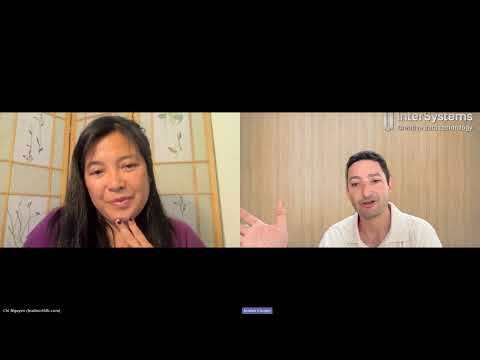
Healthy Data Podcast Chi Nguyen Rettig (Lead North) & Jordan Cooper (InterSystems)
July 1, 2026, 6:06PM
24m 3s
Jordan Cooper 0:03
Technology Officer of Lead North. Chi, thank you so much for joining us today.
Chi Nguyen Rettig 0:07
Glad to be here.
Jordan Cooper 0:09
So for those who don't know, Lead North is a woman-owned IT consulting firm based in Brush Prairie, Washington, specializing in healthcare interoperability. So we have an interesting topic that we're going to be discussing today, Chi. The topic is payers are from Mars, providers are from Venus. Specifically, we'll be talking about health data interoperability in the United States. As background, health plans and providers serve a common patient population. As everyone knows, they operate with overlapping set of health data. But when the two ecosystems are brought together, there's still a divide. They speak the same, they're speaking the same data exchange languages. They have HL7, CCDA, and FHIR. But today we're going to be examining the foundation of the payer provider divide so that we can more effectively dr communications among all stakeholders and have value-based solutions across the health data interoperability landscape. That was a mouthful. So I'm going to pause. I'll let you take over. What does that mean to you? What are you seeing? Let's go from there, Chi.
Click to read the full transcript
Chi Nguyen Rettig 1:11
Yeah, thanks for that. And the first thing I want to just kind of call out, and I realize that this may be in my original description, but now that I heard it said out loud, that word divide is something I do want to address first because I'd like to reformat or readdress that word because I don't believe there's exactly a payer provider divide. And right now there's a lot of push for payer provider interoperability, integration, and data exchange. And I believe there is, the title says it all, right? It feels like we should be able to be speaking the same language. but what is the disconnect or the misalignment? And what I find in my role as an interoperability consultant, a lot of times almost feels like being a relationship counselor, right? We're speaking what we think is the same language, but what's actually important to
Jordan Cooper 2:03
Mm-hmm. Mhm.
Chi Nguyen Rettig 2:09
both parties or both entities, and how do we bridge that gap? I think the easiest way to, the easiest way to understand what I see as this, you know, pairs are from Mars and providers are from Venus sort of misalignment or gap is that The data is the same, but different things or different processes are important to either side. So for instance, on the clinician or the provider side, it's about care delivery. And so the data, the patient data is there to be able to provide better care. for the patient. And so there's information to support that. Now that same or very, it looks like that same set of information is available or used by the payer or the health plan side, but they are looking at claims and risk adjudication and billing. And so the types of, at the very low level, the types of identifiers that they need, the types of data elements that are meaningful, maybe slightly different, even though they seem like they're the same on the surface. And also, even when they use the same type of data, like diagnoses or visit information, encounter information, it really means different things or different parts of it have different levels of importance. to the payer side versus the provider side. And that's sort of what we're trying to figure out how they can talk to each other.
Jordan Cooper 3:43
So, Chi, there's a few kind of buckets that we were going to kind of try to delve into today. We may not get to all of them, but we'll do our best. I think we're going to cover risk adjustment, quality measurement, and a CMS regulatory environment. Would you help us approach these buckets by grounding us in a few anecdotes with customers you've worked with and the different data issues that the payers and providers are dealing with and how they may observe the same data elements, but extract different meaning or have different incentives that shape their behavior.
Chi Nguyen Rettig 4:19
Yeah, I think a great one to look at is risk adjustment. And I'm going to dig down, I'm A technologist at heart, so I'm going to dig down and kind of show this interesting example, because I've hit this more than once. When you go in and the ask, the ask from either the provider or the payer is to integrate the systems. And here's a bunch of data. get the data to flow in. So on the surface, it's like, okay, that seems like a very algorithmic nuts and bolts problem, right? I will parse it, I'll understand the data, I'll put it into reasonable buckets that you can all understand. And so I had a scenario where we were doing exactly that. And then in the background,
Jordan Cooper 4:43
Mm-hmm. Mm-hmm.
Chi Nguyen Rettig 5:01
someone on this was an insurer or a payer, they were like, right now we're using PDFs, but we want to start consuming this data so we can do better analysis on it. So we can sort of do a business intelligence and do these, create these models. And so yes, this is exactly what we're doing. We're just aggregating the data. We're putting it into reasonable buckets. We're normalizing it for you. And then there was always this, but right now our people, we look at PDFs, like we pull up documents and we have a human looking at PDFs and that's really what we want to move away from. And so I hear this, I hear this, and it was almost at the 11th hour. And we said, right, we will preserve PDFs. absolutely, or we will convert to PDFs. And then at the 11th hour, they're like, okay, we're about to go live, but where are the PDFs? And we're like, well, we're archiving them, like you said. And we're like, no, no, no. Phase one, our people need to look at these PDFs. Like this is how they do risk adjustment. This is, you know, they're not ready to retrain on this whole new system.
Jordan Cooper 5:45
Hmm.
Chi Nguyen Rettig 6:05
And it just, this is probably one of the first incidents that made me realize that, you know, we might have been on slightly different planets here. I understand that the long-term goal was to disaggregate and, you know, normalize this clinical data so you can do more powerful, you know, use cases with it.
Jordan Cooper 6:16
Mhm.
Chi Nguyen Rettig 6:25
But in the short term, there is a current process. And for risk adjustment, they're looking at this overall document. And more importantly, this is the document that they're used to, they're standardized on looking at. And that's what you have to deliver is you have to remember the human process that's involved on both sides, on the payer side and the provider side. as you dig deep into the technology and, you know, put all your whizbang tools to effect.
Jordan Cooper 6:52
Actually, I think a lot of our listeners will feel that the scenario you just described resonates with them with regards to human pushback due to cultural changes and change management processes and the fact that many organizations don't so much have, they may have a technology problem, but they also have a political and cultural problem that accompanies any kind of technological changes and processes. Is that, are you able, so I'd like to dive deeper into that. So you said that this was a payer who was relying on PDFs and looking to change extract data, discrete data elements from the PDFs for long-term analytics, but still had a process that was dependent now on PDFs and failed to communicate that. How could payers better kind of articulate their needs in the future? And also, was there a way to avoid that or what was a lesson learned from that experience?
Chi Nguyen Rettig 7:57
I do want to frame this. It was a good lesson learned for all parties. I don't think the payer or the process is wrong. We have to start somewhere and we want to bridge the gap. We want technology to make lives easier, right? And before we decide to reinvent everything or reformat everything,
Jordan Cooper 8:00
Mm-hmm. Mm-hmm. Mhm. Thank you. Mhm.
Chi Nguyen Rettig 8:17
But I think that what lesson learned, what could have avoided that is I think asking at a base level before making assumptions, which I admit I did in this situation, making assumptions, I'm going into a technical project. These are the sorts of things we do in technical projects. You know, strip away that language. Like we assumed we had a common language because they were exchanging.
Jordan Cooper 8:22
Mhm. Mm-hmm. Mm-hmm.
Chi Nguyen Rettig 8:41
these data formats that were common to everyone, strip away that first and ask, what are your needs? What is your number one priority on day one, right? On day one of go live, what do you want your staff to be able to do? And then, well, it's, you know, phase two, what's important next? And I think that was a very fundamental, a very fundamental conversation that that needs to happen, especially when you're sort of on the cutting edge. You're doing these projects where people will say, this is the first time we've done this. And that's almost a little warning bell to be like, all right, take it down and ask for what is really important. At the end of the day, what are the things that are important to you?
Jordan Cooper 9:11
Mhm.
Chi Nguyen Rettig 9:25
I mean, on the same level, payers member eligibility and member eligibility checking and verification is probably the most important feature. And dealing with those identifiers for member eligibility is the most important thing. Those same identifiers on the clinician side are not needed. They're not needed for patient care. They're not needed for those provider systems. So whether or not they track in the
Jordan Cooper 9:26
Not. Mmh.
Chi Nguyen Rettig 9:50
the same way. It's a big gap that needs to be addressed early on when trying to get these parties to talk together. And so back to the basics, I guess, is the short answer to your question.
Jordan Cooper 10:03
Yeah, so again, the topic today is payers are from Mars and providers are from Venus. And we're talking about payers right now. And you just mentioned that this PDF was important to payers for some kind of process to drive analytics. Was this PDF used at all by providers? And, and, and, and how, what were their kind of needs for this data? Were they involved in the conversation at all?
Chi Nguyen Rettig 10:30
I think that you've actually hit upon a very key point is usually the payers and providers are not talking directly together anymore. It's because their needs are quite different and the process almost feels a little bit siloed.
Jordan Cooper 10:36
Mhm. Mm-hmm.
Chi Nguyen Rettig 10:50
we did our business here, you do your business there. And though there is some, there are some touch points, there's not the driving need to put them into the same room and have that conversation. And you made me think of some things, right? It's a, I'm not saying that that's what we need to do, but I think that that's one of the key things is
Jordan Cooper 10:51
Mhm. Mhm. Mhm.
Chi Nguyen Rettig 11:11
the provider's job is done. They have, they are provided this and that PDF or that CCDA, right, that comprehensive care document, it's the same document on both sides. It really is. However, it's used very differently. And so that conversation of like, why can't you send us this data? It does happen.
Jordan Cooper 11:13
Mhm. Mm.
Chi Nguyen Rettig 11:34
But whenever that happens, the answer is always like, we just don't have it, or why do you need it? There's a lot of kind of pushback, and I don't think that will ever go away. It's the knowledge that on one side, this is so important, why can't you just send it over? It's so basic to our business. And on the other side.
Jordan Cooper 11:44
Mm-hmm.
Chi Nguyen Rettig 11:53
Well, it's not needed for our business. Why would we clutter our systems with all this extra information? It's just not available.
Jordan Cooper 11:59
So... Let's segue into quality measurement enterprise. A lot of electronic clinical quality measures are used to inform reimbursement models. So it seems like this is an area where both payers and providers might find financial alignment in terms of taking care of their patient populations.
Chi Nguyen Rettig 12:17
Absolutely.
Jordan Cooper 12:21
and hitting certain metrics which affect reimbursement from the payer. Could you talk about a specific example where even despite the apparent financial alignment between two organizations around a very specific set of numerators and denominators, You still find that they're kind of on different pages, and what have you been seeing in terms of attempts to bridge those gaps?
Chi Nguyen Rettig 12:47
Yeah, I think that this is a good point is this is where Both sides, we need to improve data quality, and if we do not see, we have a good line of sight into it, you know, how can we do that? And, in this case, like you said, there's monetary benefit, there's monetary, you know, kind of tags to be able to improve this data quality. I think that...
Jordan Cooper 13:09
Mhm.
Chi Nguyen Rettig 13:13
in a specific situation, I think this is actually not even a specific, I've seen this across implementations, both on the provider side and the payer side, is the data has been exchanged for a long time now, by the way. So just already ensures by, you know, by compliance, the providers that are sending data or sending
Jordan Cooper 13:25
Mhm.
Chi Nguyen Rettig 13:35
sorry, I have members in their network, are already sending the data. So there's this mountain of historical data. There's this mountain of historical data, but before they had the conversations, who knows what was in there? It was never, it was never, again, it was never parsed and inspected and analyzed in that way.
Jordan Cooper 13:42
Mhm.
Chi Nguyen Rettig 13:55
And so you're looking to like a seven year look back of data and you're like, oh, but these were always missing, right? Now we can maybe go back and try to fix those ills, but the data was always missing and how much of it can be recreated. Some of it, you know, it's historical, it may not be relevant because you're looking at quality measures right now. But it is,
Jordan Cooper 14:02
Mhm. Can you?
Chi Nguyen Rettig 14:18
going back to an existing process and having a conversation to actually pull over what's relevant.
Jordan Cooper 14:23
Chi, can you ground us and work on a specific set of quality measures or particular quality measures, for example, 30-day readmissions or something that some healthcare delivery system and payer were looking at improving?
Chi Nguyen Rettig 14:36
I think something that we see a lot is there's specific risk measures about diagnoses like COPD. Oh, I'm going to get it wrong because I'm not a clinician. Chronic pulmonary disease, thank you, COPD, diabetes markers.
Jordan Cooper 14:42
Mm-hmm. Mhm. Obstructive pulmonary disorder.
Chi Nguyen Rettig 14:56
And so at the technical level where I come in, that is looking at specific diagnosis codes. And so, and those are frequently, those are frequently kept. Those are frequently stored and frequently exchanged. But missing pieces of information might be the exact service date when certain things happened. Are you keeping this as a historical record of the patient's history or is it an
Jordan Cooper 14:59
Mhm, mhm. Mhm. Mm-hmm. Mhm.
Chi Nguyen Rettig 15:21
encounter? Is it an actual representing a visit? So some of that data within the EHR, the electronic health system, electronic health record system of the provider, they recorded enough for them to provide that care, but what they transmit on doesn't necessarily have that level of granularity. to the payer system, the health plans that are trying to do the reporting. And so I think, again, the conversation, but to have the conversation, it really needed to be very exact. I like what you said to me at the beginning of this conversation. People don't want this high level. They don't want to like have this very long conversation. It is
Jordan Cooper 15:53
And.
Chi Nguyen Rettig 16:00
Just the facts, like, fine, we need to change. Every change is costly. Everything costs money. Tell me exactly. Tell me exactly what you need. And in the, you know, scenario that I had worked on in this particular situation, what was key was being able to profile that data quickly, right? Before you.
Jordan Cooper 16:09
Right.
Chi Nguyen Rettig 16:18
build a huge implementation, get visibility into that data on a large scale, and to be able to analyze and identify what exactly are the exact things you need to ask going forward in order to make that work.
Jordan Cooper 16:31
So. So it sounds like that a provider organization was collecting risk measures about COPD and was missing metadata about the service date and did not transmit that to payers, which made the data less valuable to payers. Meanwhile, had they kept the metadata the providers would have been incurring the cost of storing that data for their entire patient population. So how do you make an argument to a provider organization that has to bear the financial cost of maintaining data that is useful to payers, but not to themselves?
Chi Nguyen Rettig 17:13
Yeah, that's an interesting one. And I think this data, by the way, it's for those years past, it's sort of been fire, right? We fired it over. You already have it. We sent you what we meant to send you. So it's yours. We no longer own it. I think the value
Jordan Cooper 17:21
Mmh.
Chi Nguyen Rettig 17:31
right? The value is, and now this is bridging a little bit into some of the current CMS compliance regulations. The value is really once you get these different organizations speaking to one another, the end result or the end goal really is improved care on both sides. For this one, I'd like to tell kind of a personal
Jordan Cooper 17:32
Mm-hmm. Mm-hmm.
Chi Nguyen Rettig 17:52
anecdote. And it really maybe makes, maybe explains why I'm particularly passionate about this. Payers are from Mars, providers are from Venus. I'm a mother of twins. And when they were born premature, so they were in the NICU for a while and I was in the hospital as well. And we incurred
Jordan Cooper 17:53
Aha. Mhm.
Chi Nguyen Rettig 18:15
a pretty, you know, a pretty hefty hospital bill. But then we hit, and I had, I had insurance, but we hit these snacks because they said, well, first of all, your insurance is not valid. I was like, impossible. And then
Jordan Cooper 18:17
Mhm. Mhm. Mhm.
Chi Nguyen Rettig 18:33
They're like, no, we can't tie it up. It's not on your policy. And we're like pulling up our policies. We're trying to fight this, right? Hospital is getting involved, the advocates, and they were really great. And long story short, three years later, three years later, we finally get it all resolved. I said that I didn't pay off the children till they were three years old.
Jordan Cooper 18:48
Mm-hmm.
Chi Nguyen Rettig 18:53
Turned out there was an incorrect identifier. I had a subscriber ID, an ID card, an old one. It's not the one I presented, but I've been in the system as I moved employers. It was an old ID with the same insurer and they just matched it and they said, nope, and no one could untangle it. And, you know, I actually hit that same scenario on the other side as the tech.
Jordan Cooper 19:01
Mhm. Mm-hmm.
Chi Nguyen Rettig 19:16
you know, as the technical consultant, when they said, oh, well, we don't know which subscriber number, just make a guess, right? Like if you, if you can't, if you can't reach, you know, a definitive answer on which is the correct subscriber number for a person, because a person can have a whole history of enrollments and subscriber numbers, they gave me like a, they suggested a.
Jordan Cooper 19:17
Hmm. Right.
Chi Nguyen Rettig 19:38
rule of, you know, a shortcut or rule of thumb, just default to this. And I was like, no, no, no, we cannot do that. We cannot do that. And let me tell you why. Because there's a human cost behind this. There's time, there's money, but there's also the patients who have to be in the cycle. And then there's also the insurers. This cycling,
Jordan Cooper 19:42
Ha ha ha. Mhm. Yeah.
Chi Nguyen Rettig 20:12
so much work on the hospital side, their advocates, ourselves, my family, and the insurers to work out this issue.
Jordan Cooper 20:20
all of the result of an error of a manual patient identity matching process, which begs the need of why wasn't there an enterprise master person index to reconcile these different identities.
Chi Nguyen Rettig 20:27
Yeah. Great, great need for that, right? And I think also when we, you know, when we talk about AI and human in the loop, the decision, the algorithmic, right, the algorithmic, the algorithmic decision is not always the best. And that was where I suppose this was not with an AI solution, but that was where I was the human in the loop saying like, no, no, no, no, no.
Jordan Cooper 20:40
Yeah. Mm. Mhm. Mhm.
Chi Nguyen Rettig 20:56
It's not just the 1% of identifiers that you couldn't find and you just took a default. That default has potential human cost.
Jordan Cooper 21:05
So, Chi, we're approaching the end of this podcast episode. We've covered a bit of ground. Again, payers are from Mars, providers are from Venus. We've spoken about the need for interoperability between payers and providers. We've covered some risk adjustment, quality measures, and aligning incentives from a regulatory perspective. Any kind of parting words as organizations, as providers and payers begin to collaborate more, they become payviders. You see payers acquiring provider groups and provider organizations acquiring payer groups. You're seeing 0057 and 9115 from CMS where there's required interoperability between payers and providers. kind of what should our listening audience, be they payers or providers, be keeping in mind about their colleagues in the other vertical as they proceed to answer data challenges facing their organization?
Chi Nguyen Rettig 22:04
I think the thing is, well, first of all, all those alphabets, all those letters and numbers are so near and dear to what I do every day. I think in order to bring order, right, to this chaos, it can at first seem very, very daunting. I know people have talked about AI and bringing that into the mix as well. And I think that It's a complex solution. If we keep our eyes, right, and again, the source of this talk is if we keep our eyes on the fact that there's a meaning behind this data, and the core expertise is really unpacking that meaning. Do that first. Do that first.
Jordan Cooper 22:28
Mhm. Mm-hmm.
Chi Nguyen Rettig 22:42
first before you barrel in with a solution. The solution's the easy part. I say this as a technologist. The solution's the easy part. The sort of in-depth knowledge, domain knowledge to make those calls. It's a difficult place to be, but it's the place where we need to start first.
Jordan Cooper 22:50
Mhm.
Chi Nguyen Rettig 23:01
before we embark upon these very, very huge endeavors, which are happening as we speak.
Jordan Cooper 23:06
Sounds like there needs to be a good data foundation, clean data that you're using to.
Chi Nguyen Rettig 23:11
And a good data architect, and a good data architect, architects, not one person, but yes, great foundation, clean the data, but be visible, right? Be able to look at the data and know what it means.
Jordan Cooper 23:15
Yeah. And understand what the problem is that you're trying to solve, which brings us, you know, thinking about the PDF issue you spoke about earlier. Where do you actually want to be and what would be a band-aid and what would be addressing the root cause problem? And could your solution itself be causing a problem by eliminating the PDFs, which was not desirable for that organization? All right.
Chi Nguyen Rettig 23:41
Yes, all those things. We rush in, we rush in with the new technology, but there's a human element. There always is.
Jordan Cooper 23:44
Yeah. All right, well, Chi, I'd like to thank you for joining us today.
Chi Nguyen Rettig 23:53
Thank you. Yep.